
Best Sunscreens for Harsh UAE Sun Climate
The relentless sun of the UAE is legendary, casting its brilliant, powerful rays across a landscape renowned for its captivating beauty and year-round outdoor lifestyle. While this glorious sunshine is a major draw for residents and tourists alike, it also presents a significant challenge: protecting skin from its intense and often underestimated power.
In 2025, understanding the best sunscreens for Harsh UAE sun and choosing the right sunscreen for UAE climate is not merely a recommendation; it is an absolute necessity for safeguarding your skin’s health and appearance against the harsh realities of desert exposure. This comprehensive guide will equip you with the knowledge to make informed decisions, ensuring your skin remains protected, healthy, and radiant under the persistent UAE sun.
Key Takeaways
- High UV Index Requires Strong Protection: The UAE experiences consistently high to extreme UV indices, necessitating broad-spectrum sunscreens with SPF 30 or higher and PA++++.
- Formulation Matters for Comfort: Look for lightweight, non-comedogenic, and water-resistant formulations that can withstand heat, humidity, and sweat without feeling heavy or causing breakouts.
- Chemical vs. Mineral: Know Your Options: Both chemical and mineral sunscreens are effective; choose based on skin type, preference, and any sensitivities. Mineral options are often preferred for sensitive skin.
- Consistent Application is Crucial: Sunscreen must be applied generously at least 20 minutes before sun exposure and reapplied every two hours, or more frequently after swimming or sweating.
- Beyond Sunscreen: A Holistic Approach: Combine sunscreen with other protective measures like protective clothing, hats, sunglasses, and seeking shade, especially during peak UV hours (10 AM – 4 PM).
Understanding the UAE Climate and Its Impact on Your Skin

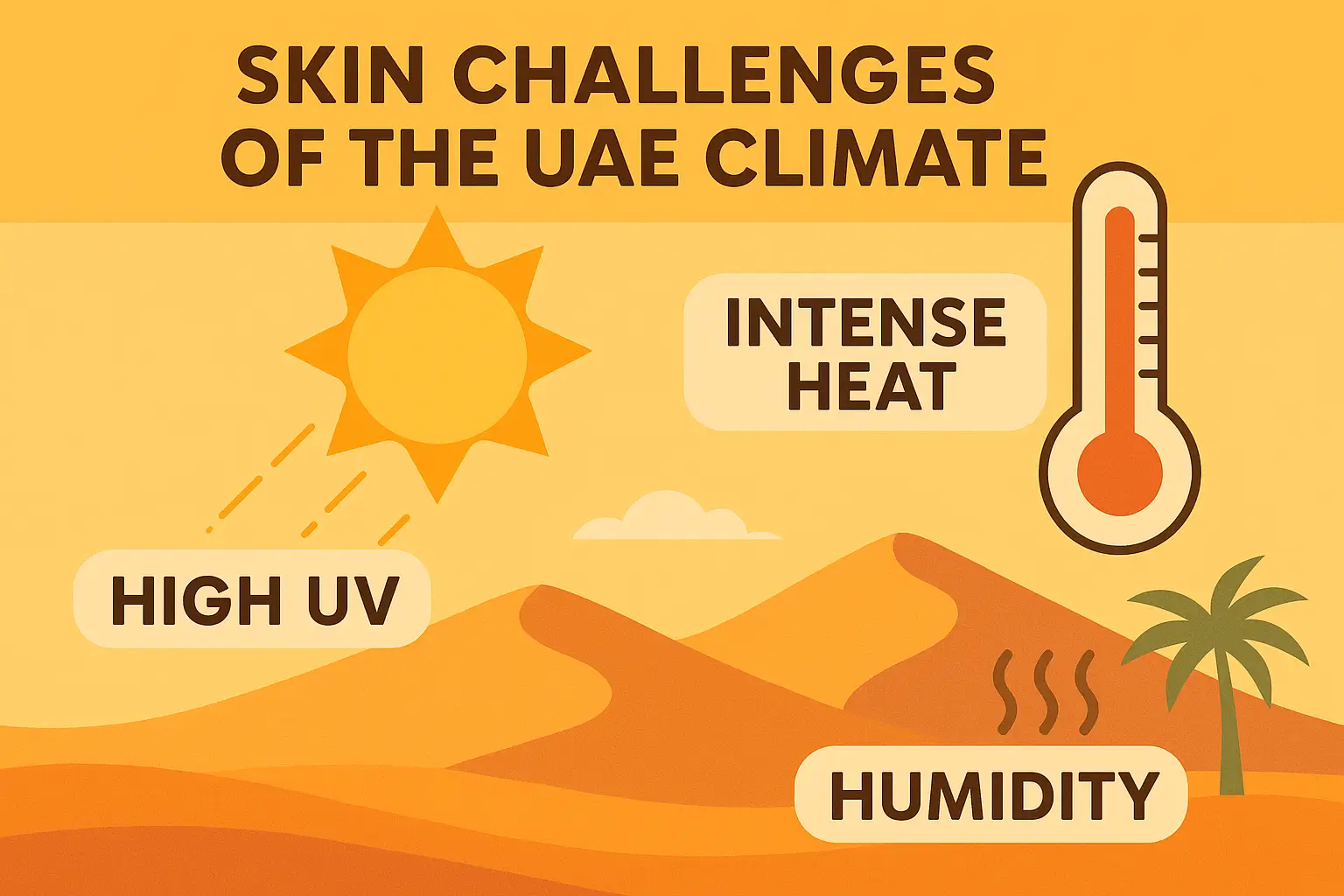
The UAE is characterized by an arid desert climate, which translates to year-round sunshine, high temperatures, and varying levels of humidity, particularly along the coast. These environmental factors create a unique set of challenges for skin health that demand specific consideration when choosing and using sunscreen for UAE climate.
The Unrelenting UV Index
One of the most critical aspects of the UAE climate is its consistently high UV index. The UV index is an international standard measurement of the strength of ultraviolet (UV) radiation from the sun at a particular place and time. In the UAE, particularly during summer months (and often well into autumn and spring), the UV index frequently reaches “very high” (8-10) or “extreme” (11+) levels [1]. At these levels, unprotected skin can burn in as little as 10-15 minutes. Long-term exposure without adequate protection leads to a higher risk of:
- Sunburn: Painful redness, peeling, and discomfort.
- Premature Skin Aging: Wrinkles, fine lines, sunspots, and loss of elasticity.
- Hyperpigmentation: Dark spots and uneven skin tone, often exacerbated by heat.
- Skin Cancer: Including melanoma, basal cell carcinoma, and squamous cell carcinoma, which are directly linked to UV exposure [2].
Heat and Humidity Considerations
Beyond UV radiation, the intense heat and humidity in the UAE also play a role in how your skin reacts to sunscreen. High temperatures can increase perspiration, which can reduce the effectiveness of non-water-resistant sunscreens. Humidity, while sometimes offering a temporary feeling of moisture, can also contribute to clogged pores and breakouts, especially when combined with heavy or occlusive skincare products. Therefore, the best sunscreen for UAE climate must not only offer robust UV protection but also feel comfortable and breathable on the skin, without causing irritation or hindering the skin’s natural functions.
Air Quality and Pollution
While not directly related to sunscreen efficacy, air quality in urban areas of the UAE can sometimes be affected by dust and pollution. This environmental stress can further compromise skin health, making effective sun protection even more vital. Some advanced sunscreen formulations now include antioxidants to offer an additional layer of defense against environmental aggressors.
This guide blends scientific insight, holistic wellness, and practical ritual, tailored for the vibrant, multifaceted woman over 35.
The Best Sunscreens for Harsh UAE Sun : A Holistic Blueprint for Radiant, Resilient Skin
Turning 35 isn’t a warning—it’s a invitation. An invitation to deepen your self-care, honor your body’s evolving wisdom, and shift from chasing youth to cultivating timeless radiance. At HypeLadies, we believe true anti-aging isn’t about erasing time—it’s about nourishing your skin, mind, and spirit so you glow from within, at every stage.
This isn’t just a skincare routine—it’s a lifestyle ritual for the woman who knows her worth isn’t measured in fine lines, but in resilience, joy, and self-respect.
🌿 1. The Inner Foundation: Nutrition as Your First Serum
At 35+, your skin’s needs shift. Collagen production slows, hormonal fluctuations begin, and your barrier becomes more sensitive. The first step in anti-aging? Feed your skin from within.
- Kiwi fruit is a vitamin C powerhouse—critical for collagen synthesis and fighting dullness:
→ What Is the Benefits of Kiwi Fruit - Okra water supports gut-skin harmony, reducing inflammation and breakouts:
→ 11 Benefits of Okra Water to Ladies - Essential vitamins (A, C, E, B-complex) are non-negotiable for repair and protection:
→ Essential Vitamins for Healthy and Glowing Skin - Start your morning with cardamom lemonade green tea—a detoxifying, circulation-boosting elixir:
→ Cardamom Lemonade Green Tea
💡 Pro Tip: Hydration begins internally. Warm water in the morning improves lymphatic flow and clears congestion:
→ What Is Benefits of Drinking Hot Water
🌙 2. Your Nightly Renewal: The Gold Standard Routine
Night is when your skin repairs itself. Your PM routine should support regeneration, not just cleanse.
Step 1: Double Cleanse
- First: Oil-based cleanser to dissolve SPF and pollution.
- Second: Gentle hydrating cleanser to prep skin.
→ Skincare
Step 2: Targeted Treatments (The Anti-Aging Powerhouse Trio)
- Retinol (1–3x/week): Gold standard for collagen stimulation and cell turnover. Start slow!
- Hyaluronic Acid: Plumps fine lines by drawing moisture into the skin—apply to damp skin.
- Niacinamide: Strengthens barrier, evens tone, and reduces redness.
→ Serums and Treatments: Targeted Solutions
🌿 Natural Alternative: No retinol? Try a banana peel mask 1x/week—rich in lutein and potassium to soften texture and brighten:
→ Benefits of Banana Peel for Face
Step 3: Seal with a Barrier-Supporting Moisturizer
Look for ceramides, squalane, or shea butter—especially if you’re over 40 or in dry climates.
→ Glowing and Flawless Skin at 40
Step 4: Don’t Forget Your Neck & Décolletage
This area shows age first. Extend all products downward.
☀️ 3. Morning Defense: Antioxidants + SPF = Your Daily Armor
Your AM routine isn’t about heavy layers—it’s about protection.
- Vitamin C Serum: Shields against free radicals, brightens, and boosts SPF efficacy.
- Lightweight Moisturizer: Hydrates without greasiness.
- Broad-Spectrum SPF 30+: Non-negotiable. UV exposure causes 90% of visible aging.
→ Sun Protection: Your Daily Shield
✨ Affirmation to Pair: “My skin is protected. My choices honor my health.”
→ Affirmations and Motivation
🌸 4. Hormonal Harmony: Beauty from the Inside Out
For women 35+, hormones play a huge role in skin texture, dryness, and breakouts—especially as you approach perimenopause.
- Balance hormones naturally with flaxseeds, leafy greens, and stress management:
→ Natural Ways to Balance Your Hormones at 40 - Prevent menopause-related hair thinning with pumpkin seeds and okra water:
→ Prevent Menopause Hair Loss at 40
→ Benefits of Pumpkin Seeds for Ladies - Prioritize sleep—your nightly regeneration window:
→ 5 Tips to Sleep Better with Menopause
🧘♀️ 5. The Mind-Skin Axis: Stress Is Aging—Peace Is Radiance
Chronic stress spikes cortisol, which breaks down collagen, triggers breakouts, and accelerates aging.
- Meditation reduces inflammation and supports emotional balance—key for clear skin:
→ Benefits of Meditation for Anxiety - Affirm daily: Replace “I’m aging” with “I’m evolving with grace.”
→ Affirmations for Self-Worth & Confidence - Rest isn’t selfish—it’s strategic, especially for single moms:
→ Self-Care for Single Moms
💬 “Glowing skin isn’t about perfection—it’s about consistency, care, and self-respect.”
🚶♀️ 6. Lifestyle Synergy: Movement, Nature, and Joy
Anti-aging isn’t just topical—it’s lifestyle.
- Walking 30 minutes daily boosts circulation, delivering oxygen and nutrients to your skin:
→ Benefits of 30 Minutes Walk - Green tea fights free radicals with EGCG—sip it or use it topically:
→ Benefits of Green Tea for Ladies - Spend time in nature to reset your nervous system and reduce oxidative stress:
→ Benefits of Spending Time in Nature for Ladies
🌼 7. Holistic Hair & Scalp Care: Your Crown Matters Too
Hair thinning, dryness, or texture changes often accompany skin aging.
- Indian home remedies like fenugreek and amla oil nourish roots and add shine:
→ Indian Home Remedy for Silky Hair - Address vitamin deficiencies—iron, biotin, and B12 are crucial for hair health:
→ Vitamin Deficiency That Causes Hair Loss
Age with Intention, Not Fear
At 35+, your beauty isn’t fading—it’s refining. You’ve earned the clarity to care for yourself with wisdom, not worry. With this routine, you’re not fighting time—you’re honoring it.
“Radiance isn’t applied—it’s cultivated through care, consistency, and self-love.”
Explore more holistic beauty, wellness, and lifestyle wisdom—only at HypeLadies.
Key Features of Effective Sunscreen for UAE Climate
Choosing the right sunscreen for UAE climate goes beyond just grabbing any bottle off the shelf. It requires a thoughtful selection based on specific criteria that address the unique environmental conditions.
Broad-Spectrum Protection is Non-Negotiable
This is perhaps the most crucial feature. “Broad-spectrum” means the sunscreen protects against both UVA and UVB rays.
- UVA Rays: These rays penetrate deeper into the skin, contributing to premature aging (wrinkles, fine lines, age spots) and increasing the risk of skin cancer. Look for products labeled “PA++++” which indicates the highest level of UVA protection.
- UVB Rays: These are the primary cause of sunburn and also play a significant role in the development of skin cancer. SPF (Sun Protection Factor) primarily measures protection against UVB rays.
Always ensure your chosen sunscreen for UAE climate explicitly states “broad-spectrum” on its label.
High SPF (Sun Protection Factor)
Given the extreme UV index, an SPF of 30 should be considered the minimum, but SPF 50 or higher is strongly recommended for daily use in the UAE.
- SPF 30: Blocks approximately 97% of UVB rays.
- SPF 50: Blocks approximately 98% of UVB rays.
- SPF 100: Blocks approximately 99% of UVB rays.
While the percentage difference between SPF 30 and SPF 50 may seem small, that extra 1-2% can make a significant difference in cumulative sun exposure over time, especially under the intense UAE sun [3].
Water-Resistance and Sweat-Proof Formulas
With high temperatures leading to increased sweating, and the popularity of water activities, water-resistant sunscreen is essential. Look for labels indicating “water-resistant” for 40 or 80 minutes. This means the sunscreen retains its SPF for that duration even after swimming or sweating. Remember, “waterproof” is a misleading term and no sunscreen is truly waterproof. Reapplication after these activities is always necessary.
Lightweight and Non-Comedogenic
Heavy, greasy sunscreens can feel suffocating in the UAE’s heat and humidity, potentially leading to clogged pores, breakouts, and an unpleasant user experience. Opt for formulations that are:
- Lightweight and Non-Greasy: Gels, fluid lotions, or milk textures are often preferred.
- Non-Comedogenic: This means it’s formulated not to clog pores, reducing the risk of acne.
- Quick-Absorbing: So you don’t have to wait long before dressing or applying makeup.
Chemical vs. Mineral Sunscreen: Which is Best for the UAE?
Both chemical and mineral (physical) sunscreens offer effective protection and have their pros and cons, particularly when considering the sunscreen for UAE climate context.
| Feature | Mineral Sunscreen (Physical Blockers) | Chemical Sunscreen (Organic Filters) |
|---|---|---|
| Active Ingredients | Zinc Oxide, Titanium Dioxide | Oxybenzone, Avobenzone, Octinoxate, Octisalate, Homosalate, Octocrylene, etc. |
| Mechanism | Sits on the skin’s surface, creating a physical barrier to reflect UV rays. | Absorbs into the skin, converting UV rays into heat which is then released. |
| Pros | – Immediate protection upon application – Less likely to irritate sensitive skin – Good for acne-prone skin (non-comedogenic options) – Stable under UV light | – Generally lighter texture, less visible white cast – Often easier to rub in – Wide range of formulations (sprays, gels) |
| Cons | – Can leave a white cast, especially on darker skin tones (though micronized formulas improve this) – Thicker texture might feel heavier | – Requires 20 minutes to become effective – Can sometimes irritate sensitive skin – Some filters may be unstable in sunlight (e.g., Avobenzone often paired with photostabilizers) – Environmental concerns around coral reefs (though many reef-safe options exist) |
| Ideal for UAE | Excellent for sensitive skin or those preferring a natural approach. Newer formulations minimize white cast and feel lighter. | Often preferred for daily wear due to lighter feel and invisibility, especially for active individuals who sweat a lot. Choose water-resistant options. |
For the intense sun of the UAE, many dermatologists recommend mineral sunscreens for those with sensitive skin or concerns about chemical filters. However, advancements in chemical formulations have led to very stable, broad-spectrum, and lightweight options that are highly effective and comfortable. Ultimately, the “best” choice is one you will use consistently and correctly.
How to Properly Apply Sunscreen in the UAE
Even the highest SPF sunscreen for UAE climate will be ineffective if not applied correctly. Consistency and technique are paramount.
- Generous Application: Most people apply far too little sunscreen. A general rule of thumb is to use about a shot glass full (approximately two tablespoons) for your entire body, and a nickel-sized dollop for your face and neck.
- Apply 20 Minutes Before Exposure: Chemical sunscreens need time to absorb into the skin to form their protective barrier. Mineral sunscreens offer immediate protection, but it’s still good practice to apply ahead of time.
- Don’t Forget Often-Missed Areas: Pay special attention to the ears, back of the neck, tops of feet, hands, and the part in your hair (or wear a hat).
- Reapply Frequently: This is crucial in the UAE. Reapply at least every two hours, or more often if you are swimming, sweating heavily, or towel drying. Set a timer on your phone as a reminder!
- Layering with Other Products: If you use other skincare products like moisturizers or serums, apply sunscreen as the last step in your routine before makeup. Allow each product to absorb fully before applying the next.
- Check Expiration Dates: Sunscreen ingredients can degrade over time, reducing their effectiveness. Always check the expiration date on the bottle. Most sunscreens are good for three years.
“In the UAE, sunscreen isn’t just a summer accessory; it’s a daily essential. Think of it as your skin’s first line of defense against an extremely powerful opponent.”
Beyond Sunscreen: A Holistic Approach to Sun Protection
While choosing the right sunscreen for UAE climate is fundamental, it should be part of a broader strategy for comprehensive sun protection.
Seek Shade
Whenever possible, especially during peak UV hours (10 AM to 4 PM), seek shade. Utilize umbrellas, awnings, trees, or indoor spaces. This drastically reduces your overall UV exposure.
Wear Protective Clothing 👕
Clothing offers excellent sun protection. Look for:
- Long-sleeved shirts and long pants: Made from lightweight, breathable fabrics.
- UPF (Ultraviolet Protection Factor) Clothing: This specialized apparel is designed to block UV rays, similar to how SPF works for sunscreen. A UPF 50 shirt blocks 98% of UV radiation.
- Wide-brimmed hats: A hat with a brim of at least 3 inches all around can protect your face, neck, and ears.
Sunglasses
Choose sunglasses that block 99-100% of both UVA and UVB rays to protect your eyes and the delicate skin around them from sun damage. Look for labels that explicitly state “UV400” or “100% UV protection.”
Stay Hydrated
The heat in the UAE can lead to dehydration, which can impact skin health. Drink plenty of water throughout the day to support your skin’s barrier function and overall well-being.
Specific Sunscreen Recommendations for Different Skin Types in the UAE
The ideal sunscreen for UAE climate can also vary based on your individual skin type.
- Oily/Acne-Prone Skin: Look for oil-free, non-comedogenic, gel-based, or fluid formulas. Mineral sunscreens with zinc oxide can also be beneficial as zinc has anti-inflammatory properties. Matte finishes are often preferred.
- Example: Gel-cream SPF 50, tinted mineral fluid SPF 30.
- Dry Skin: Hydrating formulas with ingredients like hyaluronic acid or ceramides can provide moisture along with sun protection. Cream or lotion textures are usually best.
- Example: Rich hydrating lotion SPF 50, cream-based mineral sunscreen.
- Sensitive Skin: Mineral sunscreens (zinc oxide and titanium dioxide) are often recommended as they are less likely to cause irritation. Avoid sunscreens with added fragrances or harsh chemicals.
- Example: Fragrance-free mineral fluid SPF 50, hypoallergenic cream sunscreen.
- Mature Skin: Look for sunscreens with added antioxidants (Vitamin C, E) to help combat free radical damage and anti-aging benefits. Hydrating, broad-spectrum formulas are key.
- Example: Anti-aging facial fluid SPF 50 with antioxidants.
- Darker Skin Tones: The challenge here is often avoiding a white cast. Modern micronized mineral sunscreens or tinted sunscreens can address this. Chemical sunscreens generally blend in invisibly.
- Example: Tinted mineral sunscreen SPF 50, chemical fluid with no white cast.
It’s always a good idea to patch-test new sunscreens on a small area of skin to ensure compatibility, especially if you have sensitive skin.
The Future of Sunscreen in 2025: Innovations and Trends
As we move through 2025, the market for sunscreen for UAE climate continues to evolve, driven by consumer demand for more effective, comfortable, and environmentally friendly options.
- Invisible Mineral Filters: Advances in nanotechnology are making mineral sunscreens less likely to leave a white cast, making them more appealing for daily use across all skin tones.
- Hybrid Formulas: Combining the best of both chemical and mineral filters to offer robust protection with a comfortable texture.
- Pollution Protection: Sunscreens incorporating antioxidants and anti-pollution ingredients are becoming more common, addressing the cumulative impact of environmental stressors.
- Reef-Safe Formulations: A growing awareness of the environmental impact of certain chemical filters (like oxybenzone and octinoxate) has led to an increase in “reef-safe” or “reef-friendly” sunscreens, which is a consideration for coastal activities in the UAE.
- Smart Packaging: Innovations like color-changing caps that indicate when it’s time to reapply, or smart dispensers that measure the correct amount of sunscreen.
Staying informed about these advancements can help you choose the most effective and suitable products for your needs in the UAE.
Navigating the vibrant, sun-drenched environment of the UAE in 2025 demands a proactive and informed approach to sun protection. Choosing the right sunscreen for UAE climate is not merely a cosmetic choice but a critical health decision that impacts your skin’s immediate well-being and long-term health. Prioritize broad-spectrum formulas with high SPF (30+, preferably 50+), water-resistance, and lightweight textures that feel comfortable in the heat and humidity. Understand the differences between chemical and mineral options, and most importantly, commit to consistent and generous application, reapplying frequently throughout the day.
Beyond the bottle, remember that sunscreen is part of a larger sun protection strategy. Embrace shade, don protective clothing, wear hats and sunglasses, and stay hydrated. By integrating these practices into your daily routine, you can fully enjoy the incredible lifestyle the UAE offers while keeping your skin safeguarded against the powerful desert sun. Your skin will thank you for it, now and in the years to come.
Why Is Strong Sunscreen Critical in UAE?
The UAE’s intense sun and high UV index cause faster burning, pigmentation, and premature aging, even during winter or on cloudy days. Experts therefore recommend SPF 50+ broad-spectrum formulas as a non‑negotiable baseline for everyday protection.
What SPF and PA Rating Should Be Used?
For desert-level UV, SPF 50+ combined with PA+++ or PA++++ (high UVA protection) helps prevent both sunburn and deep photoaging. This pairing shields against UVB-driven burns and UVA-driven tanning, wrinkles, and dark spots typical in harsh climates.
Which Sunscreen Textures Work Best in UAE Heat?
In hot, humid conditions, gel or aqua-based sunscreens suit oily/combination skin, while creamier or mineral formulas are better for dry or sensitive types. Lightweight, non-greasy, fast-absorbing textures encourage generous use and reduce sweat-induced heaviness.
What Are Key Sunscreen “Entities” to Look For?
Look for broad-spectrum filters (e.g., UVB and UVA filters), SPF 50+, high PA rating, and water or sweat resistance for outdoor use. Added antioxidants and hydrating ingredients like glycerin help combat free-radical damage and dryness from the UAE sun.
Are Certain Brands Often Recommended in the UAE?
Regional guides frequently highlight La Roche-Posay Anthelios, Neutrogena Ultra Sheer, EltaMD UV Clear, and local formulas such as KJ Serums Solar Defence and Skya sunscreens. These options combine high SPF, broad-spectrum protection, and cosmetically elegant textures suitable for daily wear in UAE weather.
How Should Sunscreen Be Applied for Maximum Protection?
Apply about a teaspoon for face and neck (two fingers’ worth) 15–20 minutes before sun exposure and reapply every two hours outdoors. Reapplication is especially important in the UAE if sweating, toweling, or swimming, even with water-resistant formulas.
Do You Need Different Sunscreens for Face and Body?
Many people prefer dedicated face sunscreens that are non-comedogenic, fragrance-light, and makeup-friendly, plus more economical body SPFs for larger areas. Using both encourages proper quantities without worrying about breakouts or cost per use.
How Can Makeup and Sunscreen Be Layered in UAE?
Layer sunscreen as the last skincare step, then wait a few minutes before applying makeup to avoid pilling. For long days in the sun, SPF setting sprays or cushion compacts help top up protection over makeup without disturbing it.
What About Water Sports and Outdoor Activities?
For beach days, desert trips, and water sports, choose a water-resistant SPF 50+ sunscreen that adheres well despite sweat and water. Reapply every 80–120 minutes and pair with hats, sunglasses, and UPF clothing for comprehensive defense.
How Does Daily Sunscreen Fit into an Overall Routine?
In UAE conditions, a simple routine is: cleanse → antioxidant or hydrating serum → moisturizer (if needed) → broad-spectrum SPF 50+ every morning. This structure addresses key photoaging entities—UV exposure, free radicals, and dehydration—while remaining realistic for daily use.
References
[1] World Health Organization (WHO) and World Meteorological Organization (WMO). Global Solar UV Index: A Practical Guide. Retrieved from official WHO/WMO publications. [2] American Academy of Dermatology Association (AAD). Skin Cancer Facts and Statistics. Retrieved from aad.org. [3] Skin Cancer Foundation. Understanding SPF. Retrieved from skincancer.org.

Hypeladies.com, founded in 2020 by Susanna, is a premier digital platform dedicated to empowering women through insightful and practical content. Born out of Susanna’s personal experiences as a mother and professional, the website addresses the everyday challenges women face by providing guidance on fashion, beauty, parenting, health, and relationships. Hypeladies believes that knowledge is power, aiming to equip women with the information they need to make informed decisions, boost their confidence, and live their best lives. With a commitment to fostering a supportive community, Hypeladies.com serves as a comprehensive resource for women at all stages of life, inspiring them to achieve their goals and embrace their potential.
Discover more from Empowering Lifestyle Advice
Subscribe to get the latest posts sent to your email.